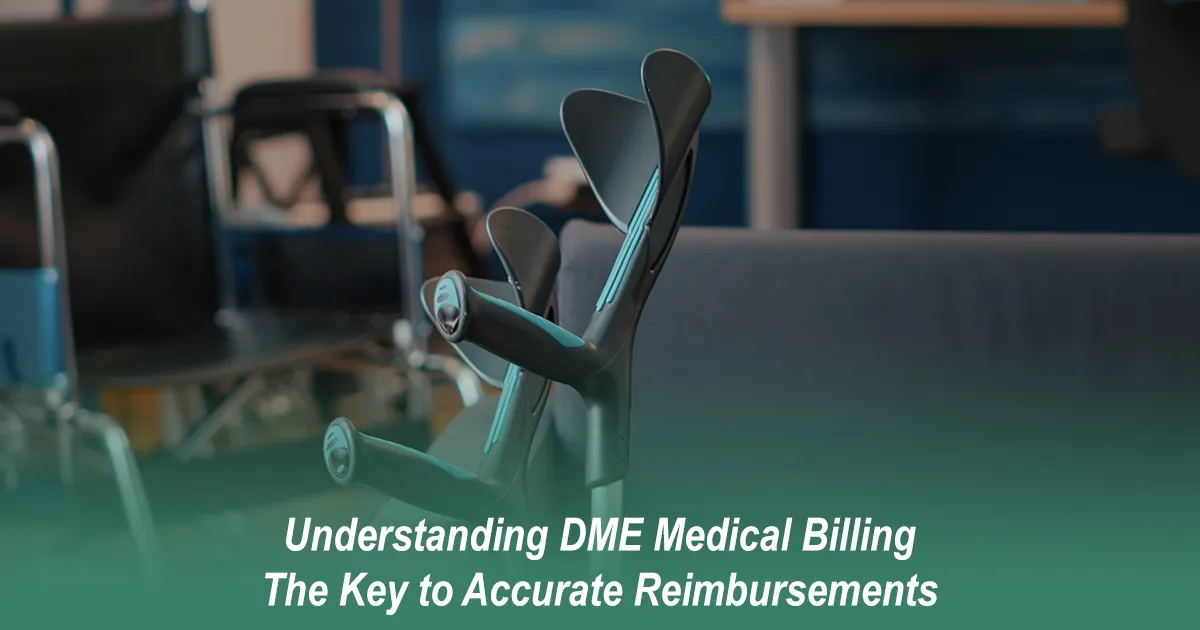




Healthcare industry depends on patient care and financial process accuracy. DME medical billing is a complex billing process which requires a thorough understanding of insurance rules and documentation.
At MedSole RCM we help healthcare providers and clinics, so that they can easily handle the complexities of dme in medical billing. This blog explains all of the important factors of durable medical equipment DME billing services from coding and claim submission to compliance and denial management.
What is DME in Medical Billing?
The Definition of DME
DME stands for Durable Medical Equipment, like the prescription of reusable medical equipment with specific medical needs. For example, wheelchairs, oxygen concentrators, hospital beds, glucose monitors, and prosthetic devices.
In dme in medical billing, these items are billed differently than regular medical services. DME billing includes verification of medical necessity, prior authorization, submitting detailed documentation, and offering compliance with proper insurance guidelines.
How DME Medical Billing Differs from Regular Billing
Billing for DME requires unique procedures and codes. Unlike typical physician or hospital billing, dme medical billing services must reflect:
- Status of Equipment ownership: rented or purchased.
- Usage Time: such as daily, monthly, or one-time.
- Modifiers: indicating repairs, replacements, or initial setups.
- Supporting documentation: including prescriptions, medical necessity letters, and proof of delivery.
Common Types of Durable Medical Equipment
Mobility Equipment
Respiratory Equipment
Orthotic and Prosthetic Devices
Monitoring and Support Equipment
The DME Billing Process
The DME billing process is more intricate than standard healthcare billing. DME medical billing companies like MedSole RCM follow a systematic approach:
Step 1: Verification and Authorization
Before providing the equipment, the provider verifies the patient’s insurance coverage and obtains prior authorization.
Step 2: Documentation
The physician must submit detailed medical documentation that establishes medical necessity. This may include the prescription, clinical notes, and sometimes progress reports.
Step 3: Coding and Claim Preparation
Special DME HCPCS (Healthcare Common Procedure Coding System) codes are used. The claim must also specify modifiers such as RR (rental), NU (new equipment), or MS (maintenance).
Step 4: Claim Submission
Once verified and coded, claims are submitted electronically or manually to Medicare, Medicaid, or private insurers.
Step 5: Payment and Follow-Up
After submission, the claim is tracked. Denied claims are corrected and resubmitted. DME medical billing services offers consistent follow-up to secure reimbursement.
Common Challenges in DME Billing
Frequent Claim Denials
DME claims are often denied for missing documentation, incorrect modifiers, or failure to establish medical necessity.
Complex Payer Guidelines
Every payer — Medicare, Medicaid, and private insurers — has its own rules regarding dme in medical billing, making the process complicated for providers.
Inconsistent Coding
Using incorrect HCPCS codes can lead to significant revenue loss.
Documentation Errors
Incomplete or mismatched paperwork between physicians and suppliers can cause delays and rejections.
How DME Medical Billing Companies Help Providers
Partnering with dme medical billing companies like MedSole RCM ensures billing precision and improved cash flow. Our team focuses on:
- Accurate HCPCS Coding: Correct code use for every DME item.
- Eligibility Verification: Offering insurance coverage before dispensing equipment.
- Compliance Management: Aligning documentation with insurance companies and CMS rules.
- Denial Recovery: Rapid response to denied or underpaid claims.
- Reporting: Tracking revenue and identifying trends in dme in medical billing.
These measures enhance financial efficiency while maintaining full compliance.
Documentation in DME Billing
Required Records
For successful DME claim submission, documentation must include:
- A signed physician order
- Patient demographics and insurance information
- Diagnosis code justifying medical necessity
- Proof of delivery
Importance of Medical Necessity
Insurers require proof that the equipment is essential to treat or manage a diagnosed condition. For example, a wheelchair prescribed for mobility impairment must include diagnosis and limitations of the patient.
Compliance with CMS Guidelines
DME medical billing services follow CMS documentation standards to avoid payment delays or audits.
The Role of Durable Medical Equipment DME Billing Services
Ensuring Compliance
Compliance is key in durable medical equipment DME billing services. From coding to documentation, each step should meet CMS and insurance policies.
Improving Efficiency
Automated claim submission tools, used by dme medical billing companies, results in less human errors and increase the reimbursements.
Enhancing Revenue Recovery
By correcting the errors, resubmitting denied claims, and tracking of payments, DME billing teams can easily maintain the financial stability for healthcare providers.
The Importance of Outsourcing DME Billing
Outsourcing dme medical billing services to MedSole RCM helps healthcare providers in various ways:
- They will be focus on patient care instead of complex medical billing processes.
- The claim errors and denials start decreasing.
- The reimbursements will be faster and revenue cycle performance improves.
- Providers will stay updated with the latest CMS and insurance rules.
Outsourced durable medical equipment DME billing services combine technology, expertise, and compliance for consistent success.
Role of Technology in DME Billing
Automated Coding Tools
Modern billing software assists in applying accurate HCPCS codes for dme in medical billing, reducing errors.
Claim Tracking Systems
Real-time tracking systems help providers and dme medical billing companies monitor each claim until reimbursement is complete.
Data Analytics
Analytics tools identify denial patterns and help refine dme medical billing services strategies for better performance.
Compliance and Audits in DME Billing
DME billing is closely regulated due to frequent cases of misuse and fraud. DME medical billing companies ensure all claims comply with Medicare guidelines.
Handling Audits Effectively
During audits, durable medical equipment DME billing services provide clear documentation, claim records, and medical necessity proofs to ensure smooth resolution.
Benefits of Partnering with MedSole RCM
At MedSole RCM, our expertise in dme in medical billing ensures accuracy from start to finish. We handle coding, verification, submission, and follow-up with a focus on compliance and efficiency.
Our services include:
- DME claim management
- Coding and modifier accuracy
- Insurance verification
- Denial management
- Compliance monitoring
As one of the reliable dme medical billing companies, Experts at MedSole RCM help healthcare providers to receive timely payments and eliminate revenue leakage.
Conclusion
DME medical billing is a specialized domain where everything matters in each step like knowledge, precision, and compliance. From verifying patient eligibility to submitting claims with the right HCPCS codes and modifiers, every detail impacts reimbursement outcomes.
By working with dme medical billing companies like MedSole RCM, healthcare providers will be having accurate and compliant durable medical equipment DME billing services. So they will focus on the important thing: quality patient care.
FAQs
Q. Why DME billing is more complex?
DME medical billing involves authorization, coding, and documentation steps that changes from insurance to insurance. If any of the detail is missing, it will be results in delays or denials.
Q. What are the main benefits of outsourcing DME billing?
There will be more compliance and reduction in errors if dme medical billing services are outsourced.
Q. Which items qualify as DME?
Durable medical equipment includes wheelchairs, walkers, CPAP machines, braces, and hospital beds used for long-term patient care.
Q. How does documentation affect DME claims?
Proper documentation proving medical necessity is critical. Without it, even valid claims may be denied by payers.
Q. What is the role of DME billing services?
These services manage the whole medical billing process like coding, submission, follow-up, and compliance for DME healthcare providers.
Q. Why choose MedSole RCM for DME billing?
We specialize in dme in medical billing, our Experts work in a professional manner so that every claim is clean, compliant, and accurately reimbursed with having a less delay.
Q. Can DME claims be audited?
Yes, DME claims are mostly audited due to the high risk of misuse. Partnering with professionals confirms the documentation accuracy and compliance with CMS rules and regulations.